
Galvanic Coupling Chart
Galvanic Coupling Chart - Hydrogen evolution (acids) 2h + + 2e ~ h2. This chart is designed to assist in broadly assessing the risk of galvanic corrosion associated with a given metal coming into contact with another metal. Web to minimize galvanic corrosion, select fasteners based on their material compatibility with the substrates. Web below, we give a brief overview of galvanic corrosion and provide a galvanic corrosion chart to help fabricators and machinists avoid using the wrong metal combinations. The list begins with the more active (anodic) metal and proceeds down. The small surface area of the active bolts results in an undesirable galvanic couple and they are exhibiting an accelerated corrosion rate. A typical rule of thumb is that voltage differences of 0.2 volts or more suggest a galvanic corrosion risk. Web galvanic corrosion undermined the keeper rings, leading to failure and leakage. The most active metals in the galvanic corrosion chart, like aluminum, zinc, or magnesium, are more likely to corrode when connected to. Use this chart below to better understand what metals will work best together without potential for galvanic corrosion: The following galvanic table lists metals in the order of their relative activity in seawater environment. This chart is designed to assist in broadly assessing the risk of galvanic corrosion associated with a given metal coming into contact with another metal. Web often when design requires that dissimilar metals come in contact, the galvanic compatibility is managed by finishes and plating. Web figure 3a shows the galvanic corrosion of carbon steel bolts used to secure a stainless steel structural railing support on a bridge. In this article, we'll look at an example to illustrate the use of the galvanic table. Web below, we give a brief overview of galvanic corrosion and provide a galvanic corrosion chart to help fabricators and machinists avoid using the wrong metal combinations. Web there are two primary types of galvanic cells that cause corrosion: The small surface area of the active bolts results in an undesirable galvanic couple and they are exhibiting an accelerated corrosion rate. Web however, you can completely avoid galvanic corrosion by choosing matching metal anchors. A classification of the different metals and alloys according to this measured potential (see chart below). You can also learn more about overcoming potentially compatibility issues between metals. Galvanic series / galvanic table. A typical rule of thumb is that voltage differences of 0.2 volts or more suggest a galvanic corrosion risk. Web view this chart of galvanic compatibility. In this article, we'll look at an example to illustrate the use of the galvanic table. Web figure 3a shows the galvanic corrosion of carbon steel bolts used to secure a stainless steel structural railing support on a bridge. The following galvanic table lists metals in the order of their relative activity in seawater environment. Web the galvanic series compatibility of different metals can be assessed, relative to the potential for galvanic corrosion, with the use. So, for example, choosing zinc on zinc would have the lowest risk for corrosion. Web the galvanic corrosion table ranks metals from the most “active” to the least active. The list begins with the more active (anodic) metal and proceeds down. Metals listed on the top of the chart (anodic) will corrode faster than the metals on the bottom of. Use this chart below to better understand what metals will work best together without potential for galvanic corrosion: Web figure 3a shows the galvanic corrosion of carbon steel bolts used to secure a stainless steel structural railing support on a bridge. Web view this chart of galvanic compatibility. The finishing and plating selected facilitate the dissimilar materials being in contact. This chart is designed to assist in broadly assessing the risk of galvanic corrosion associated with a given metal coming into contact with another metal. Web view this chart of galvanic compatibility. The small surface area of the active bolts results in an undesirable galvanic couple and they are exhibiting an accelerated corrosion rate. The galvanic series indicates which dissimilar. Web galvanic corrosion is a localised mechanism by which metals can be preferentially corroded. You can also learn more about overcoming potentially compatibility issues between metals. Metals listed on the top of the chart (anodic) will corrode faster than the metals on the bottom of the chart (cathodic). The most active metals in the galvanic corrosion chart, like aluminum, zinc,. The small surface area of the active bolts results in an undesirable galvanic couple and they are exhibiting an accelerated corrosion rate. This form of corrosion has the potential to attack junctions of metals, or regions where one construction A classification of the different metals and alloys according to this measured potential (see chart below). A typical rule of thumb. Metals listed on the top of the chart (anodic) will corrode faster than the metals on the bottom of the chart (cathodic). Hydrogen evolution (acids) 2h + + 2e ~ h2. Use this chart below to better understand what metals will work best together without potential for galvanic corrosion: The most active metals in the galvanic corrosion chart, like aluminum,. In this article, we'll look at an example to illustrate the use of the galvanic table. This form of corrosion has the potential to attack junctions of metals, or regions where one construction Use this chart below to better understand what metals will work best together without potential for galvanic corrosion: Web below, we give a brief overview of galvanic. The galvanic series indicates which dissimilar metal will tend to corrode (anode) and which dissimilar metal Web figure 3a shows the galvanic corrosion of carbon steel bolts used to secure a stainless steel structural railing support on a bridge. In this article, we'll look at an example to illustrate the use of the galvanic table. Web below, we give a. The finishing and plating selected facilitate the dissimilar materials being in contact and protect the base materials from corrosion. Web galvanic corrosion (also called bimetallic corrosion or dissimilar metal corrosion) is an electrochemical process in which one metal corrodes preferentially when it is in electrical contact with another, in the presence of an electrolyte. Web the galvanic series compatibility of different metals can be assessed, relative to the potential for galvanic corrosion, with the use of charts depicting the galvanic (or electromotive force) series in different environments. We also provide other helpful methods for avoiding galvanic corrosion. Hydrogen evolution (acids) 2h + + 2e ~ h2. A typical rule of thumb is that voltage differences of 0.2 volts or more suggest a galvanic corrosion risk. Web in each solution, it is possible to establish a « galvanic series », i.e. Web the galvanic corrosion table ranks metals from the most “active” to the least active. ~ fe 2+ + 2e) and there are several possible cathodic reactions: The most active metals in the galvanic corrosion chart, like aluminum, zinc, or magnesium, are more likely to corrode when connected to. Web to minimize galvanic corrosion, select fasteners based on their material compatibility with the substrates. Web there are two primary types of galvanic cells that cause corrosion: Web below is a galvanic reaction chart for dissimilar metals. Web however, you can completely avoid galvanic corrosion by choosing matching metal anchors. A classification of the different metals and alloys according to this measured potential (see chart below). Web read on to find out about what it is and how to use it to analyse the compatibility of joining metals.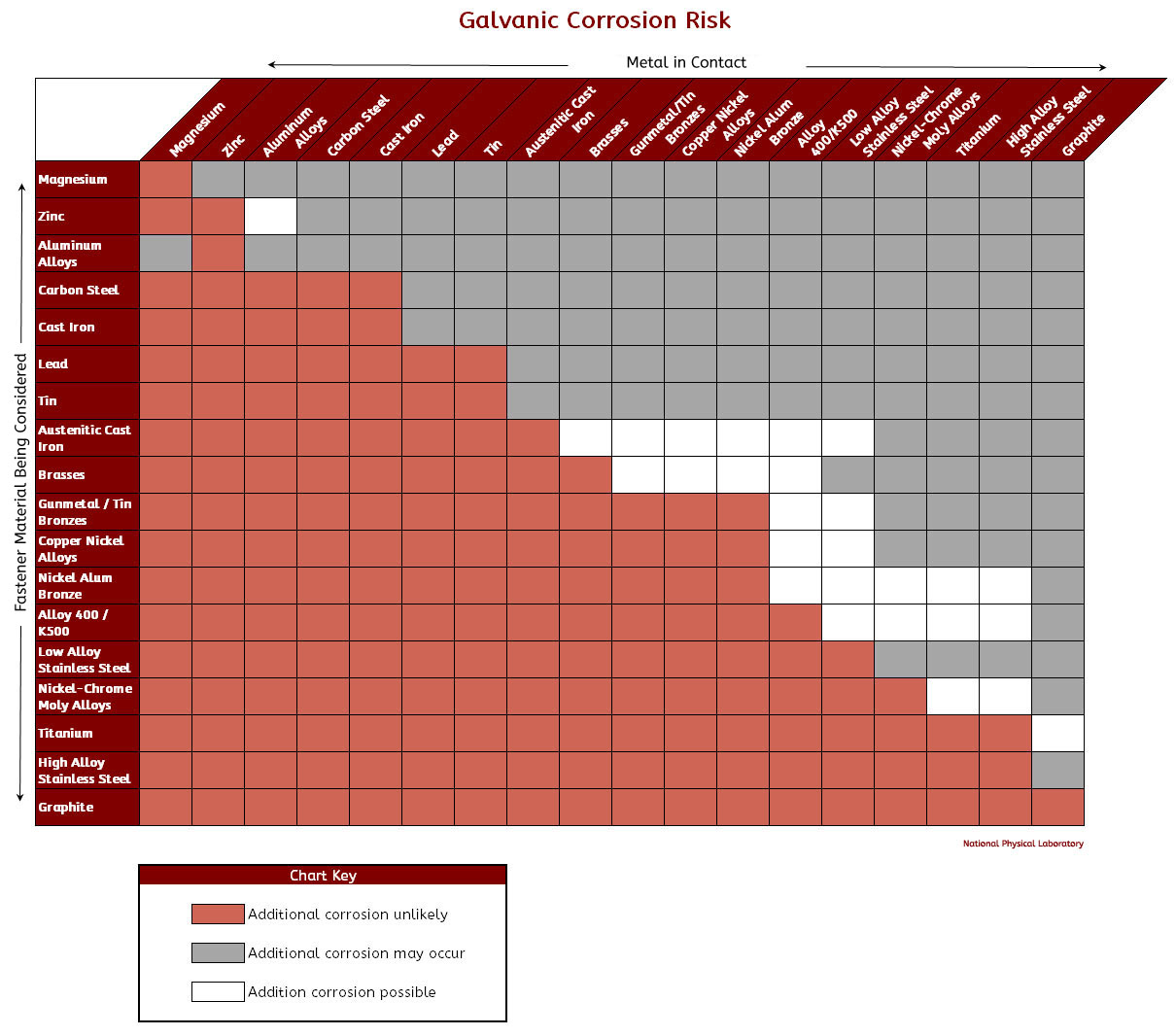
Galvanic Corrosion Chart

Stainless Steel Galvanic Corrosion Chart

Galvanic Chart FINE METAL ROOF TECH
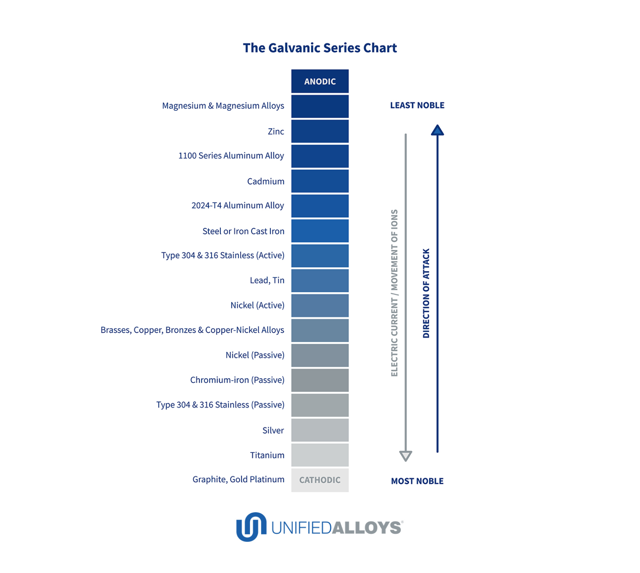
Galvanic Corrosion Chart Metals

Galvanic Corrosion Chart Metals
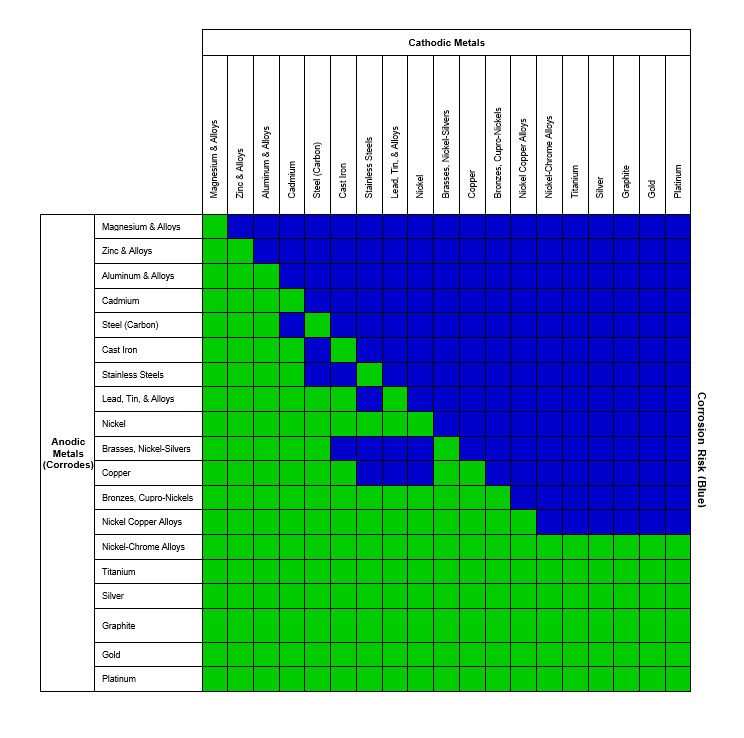
Galvanic Corrosion Chart Industrial Metal Service
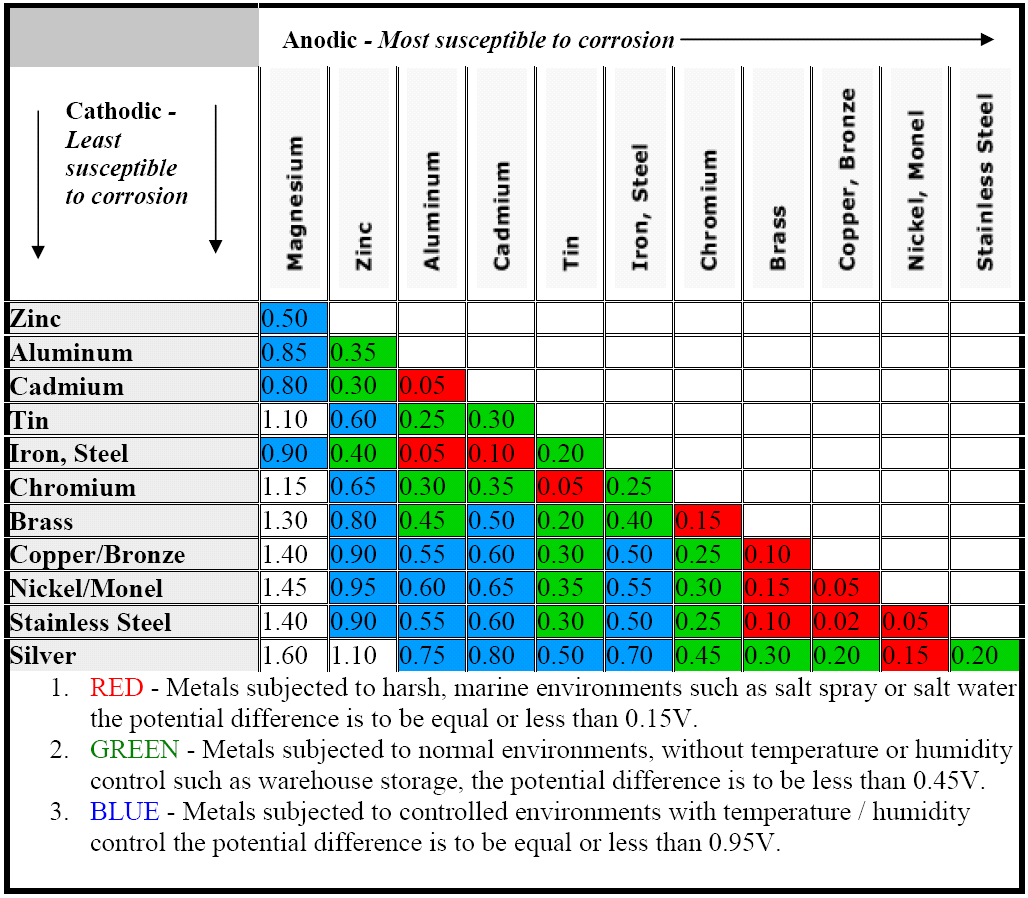
Chemical Resistance Chart For Metals

Galvanic Corrosion A Guide for Architects (with a Galvanic Series Chart)
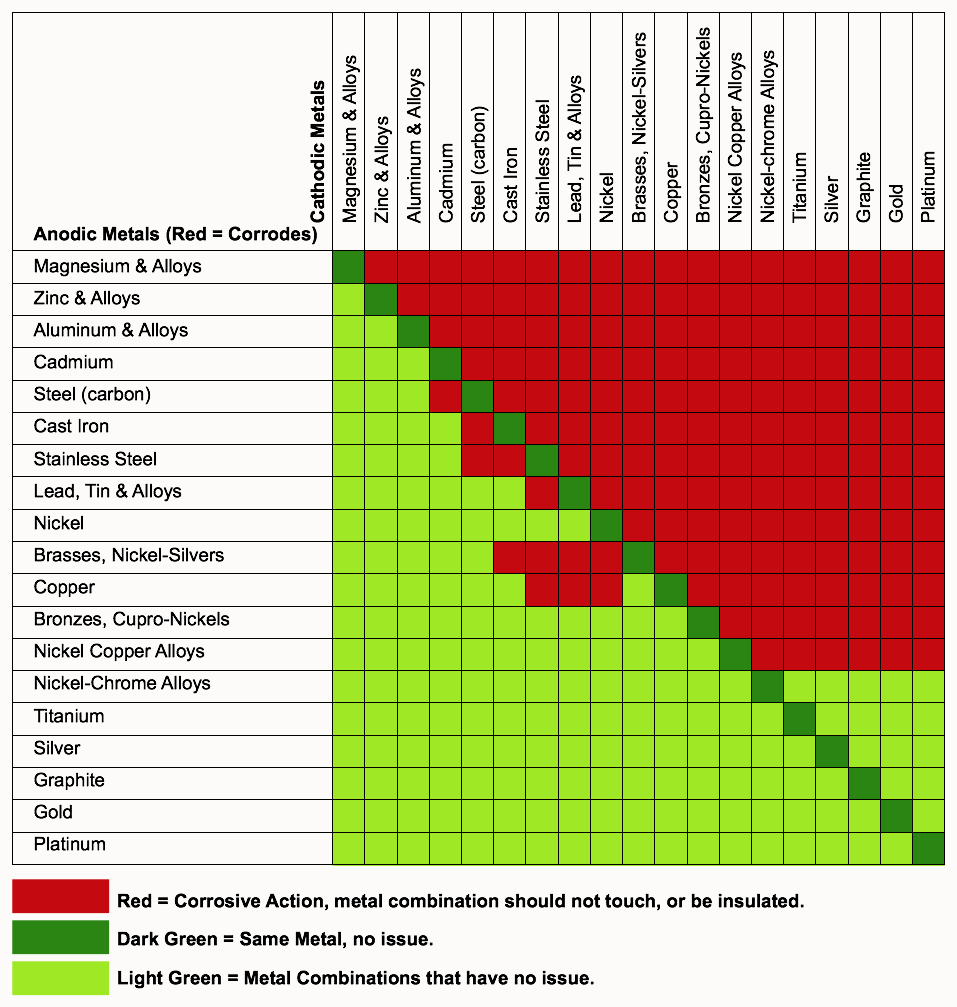
Galvanic Action Corrosion Prevention Architect's Blog
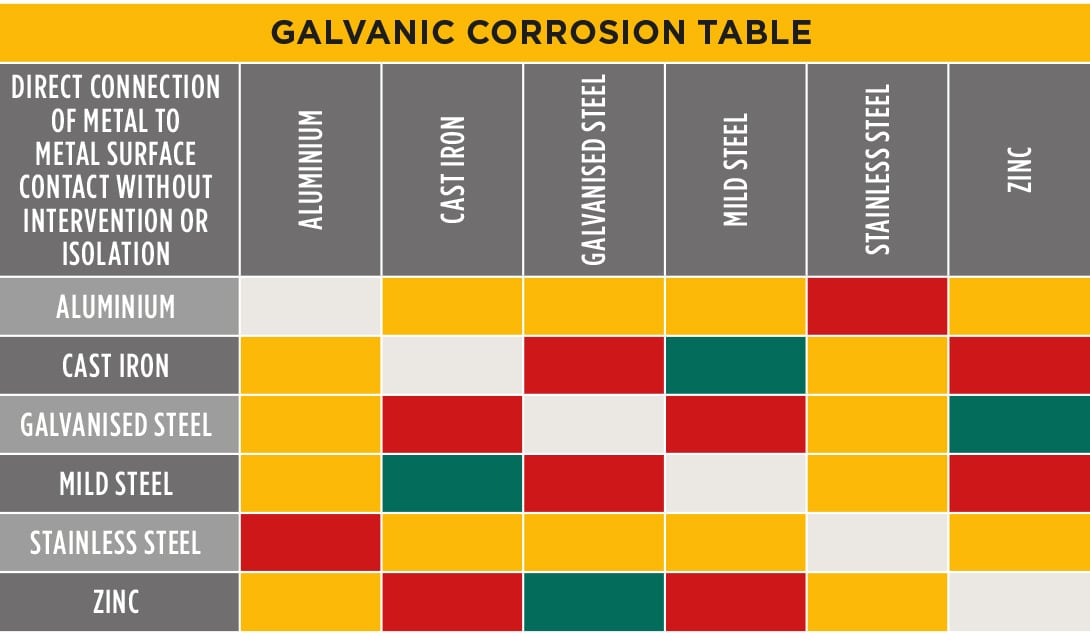
Galvanic Corrosion Cable Cleats CMP Products Limited
Galvanic Series / Galvanic Table.
Metals Listed On The Top Of The Chart (Anodic) Will Corrode Faster Than The Metals On The Bottom Of The Chart (Cathodic).
The Galvanic Series Indicates Which Dissimilar Metal Will Tend To Corrode (Anode) And Which Dissimilar Metal
The Closer Together The Material Are On The Chart To The Right, The Less Galvanic Action Will Occur.
Related Post: