
Chart Of Electron Affinity
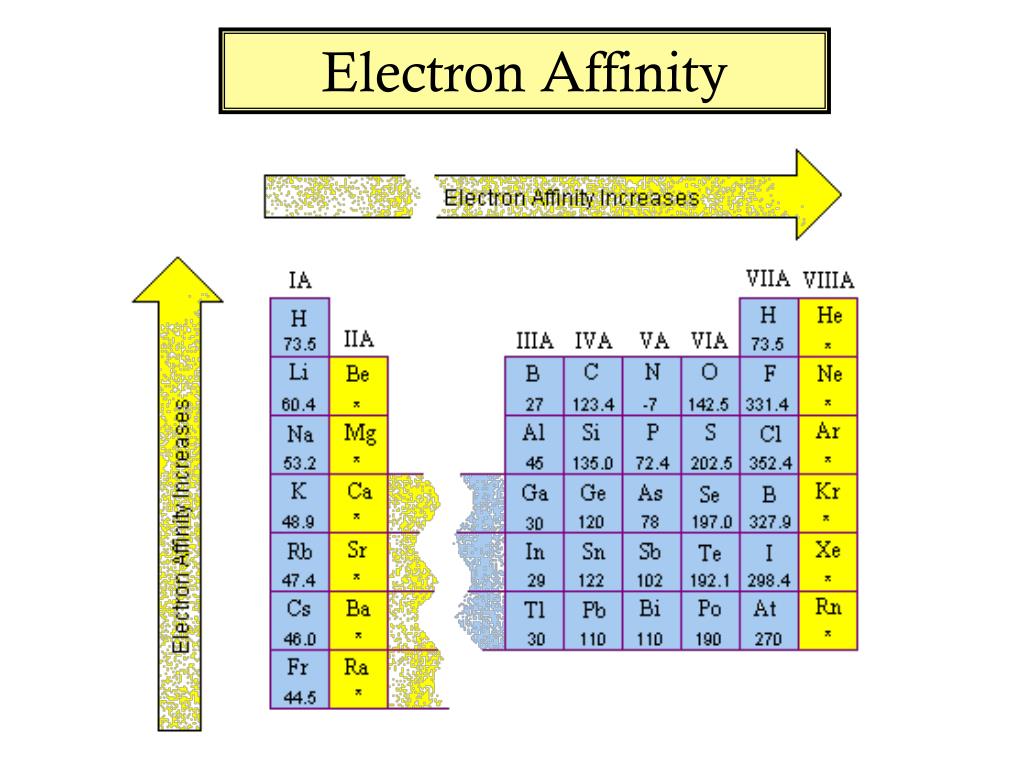
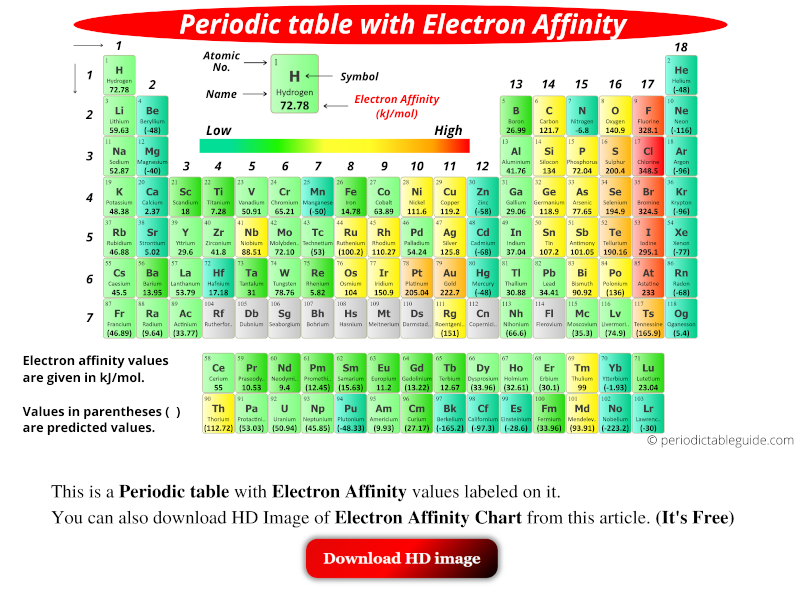
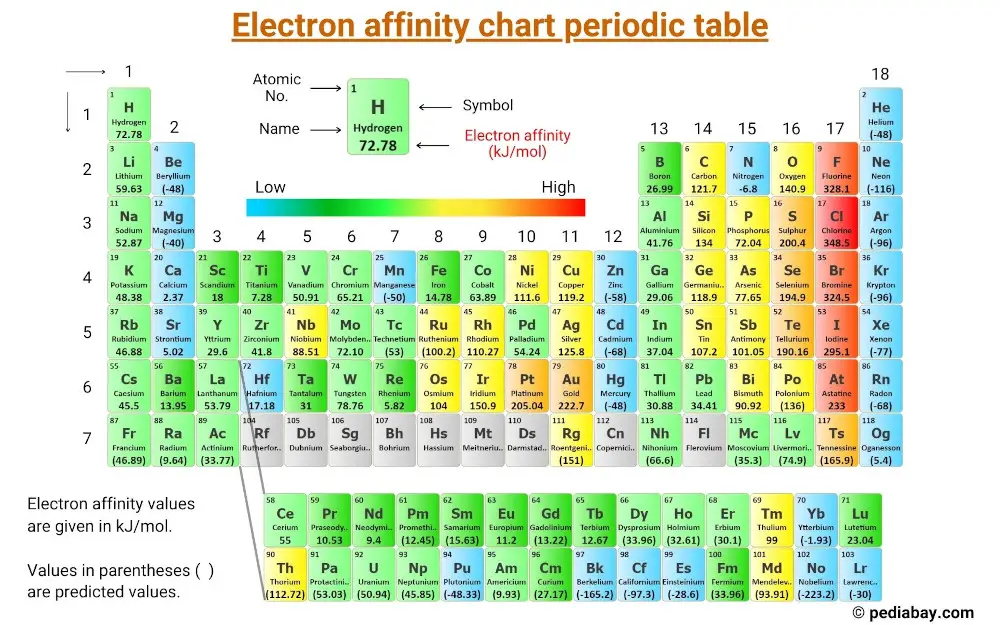
Chart Of Electron Affinity - X(g) + e − → x − (g) + energy Web electron affinity for all the elements in the periodic table. Web the most common units for electron affinity are kilojoules per mole (kj/mol) or electronvolts (ev). Web the electron affinity is defined as the amount of energy released per mole when an electron is added to a neutral atom. Web the electron affinity is defined as the amount of energy released when an electron is added to a neutral atom or molecule in the gaseous state to form a negative ion. Web the electron affinity is the potential energy change of the atom when an electron is added to a neutral gaseous atom to form a negative ion. Electron affinities decrease from top to bottom down groups. In other words, the neutral atom's likelihood of gaining an electron. In general successive electron affinity increase in magnitude ea 1 < ea 2 < ea 3 and so on. The second (reverse) definition is that electron affinity is the energy required to remove an electron from a singly charged gaseous negative ion. Small numbers indicate that a less stable negative ion is formed. As discussed, electron affinities increase from left to right across periods; You can also get the periodic table labeled with electron affinity values of elements. Electron affinity also applies to molecules, in some cases. Web the electron affinity (ea) of an element is the energy change that occurs when an electron is added to a gaseous atom to give an anion. So the more negative the electron affinity the more favourable the electron addition process is. Web electron affinity is defined as the change in energy (in kj/mole) of a neutral atom (in the gaseous phase) when an electron is added to the atom to form a negative ion. For most elements, except noble gases, this is an exothermic process. The equivalent more common definition is the energy released (e initial+ e final) when an additional electron is attached to a neutral atom or molecule. Electron affinity (ev) electron affinity (kj/mol) 1. As discussed, electron affinities increase from left to right across periods; Web electron affinity chart for all the elements are given below. First, as the energy that is released by adding an electron to an isolated gaseous atom. The figure below shows electron affinities in \(\ce{kj/mol}\) for the representative elements. In general, elements with the most negative electron affinities (the. In general successive electron affinity increase in magnitude ea 1 < ea 2 < ea 3 and so on. Web the electron affinity (e ea) of an atom or molecule is defined as the amount of energy release when an electron attaches to a neutral atom or molecule in the gaseous state to form an anion. The first electron affinities. The amount of energy released when an electron is added to atom) for most of chemical elements. Electron affinities decrease from top to bottom down groups. Web the energy change that occurs when a neutral atom gains an electron is called its electron affinity. Web table shows electron affinity (i.e. The first electron affinities of the group 7 elements. Electron affinity (ev) electron affinity (kj/mol) 1. The figure below shows electron affinities in \(\ce{kj/mol}\) for the representative elements. Web explore how electron affinity changes with atomic number in the periodic table of elements via interactive plots. The equivalent more common definition is the energy released (e initial+ e final) when an additional electron is attached to a neutral atom. X(g) + e − → x − (g) + energy The figure below shows electron affinities in \(\ce{kj/mol}\) for the representative elements. Web the electron affinity is defined as the amount of energy released per mole when an electron is added to a neutral atom. In general, elements with the most negative electron affinities (the highest affinity for an added. Web electron affinity chart for all the elements of periodic table is shown in the below table. Web electron affinity can be defined in two equivalent ways. In other words, the neutral atom's likelihood of gaining an electron. Electron affinity (ev) electron affinity (kj/mol) 1. Web the most common units for electron affinity are kilojoules per mole (kj/mol) or electronvolts. Web explore how electron affinity changes with atomic number in the periodic table of elements via interactive plots. X(g) + e − → x − (g) + energy So the more negative the electron affinity the more favourable the electron addition process is. Web the electron affinity is defined as the amount of energy released per mole when an electron. Electron affinities decrease from top to bottom down groups. In general, elements with the most negative electron affinities (the highest affinity for an added electron) are those with the smallest size and highest ionization energies and are located in the upper right. Web the electron affinity is defined as the amount of energy released per mole when an electron is. So the more negative the electron affinity the more favourable the electron addition process is. X(g) + e − → x − (g) + energy Web the electron affinity is defined as the amount of energy released per mole when an electron is added to a neutral atom. \ [x_ { (g)} + e^− \rightarrow x^−_ { (g)} + energy\]. Web the electron affinity (ea) is the energy released to add an electron to an elements in the gaseous state. How to find electron affinity The first electron affinities of the group 7 elements. By convention, the negative sign shows a release of energy. Electron affinity is the energy change when an atom gains an electron. Complete and detailed technical data about the element $$$elementname$$$ in the periodic table. First electron affinities have negative values. The amount of energy released when an electron is added to atom) for most of chemical elements. As discussed, electron affinities increase from left to right across periods; Web table shows electron affinity (i.e. Below is a visual representation of electron affinity trends throughout the periodic table. The equivalent more common definition is the energy released (e initial+ e final) when an additional electron is attached to a neutral atom or molecule. \ [x_ { (g)} + e^− \rightarrow x^−_ { (g)} + energy\] z. Web electron affinity chart for all the elements are given below. Web the electron affinity is defined as the amount of energy released per mole when an electron is added to a neutral atom. Small numbers indicate that a less stable negative ion is formed. Electron affinity also applies to molecules, in some cases. In general, elements with the most negative electron affinities (the highest affinity for an added electron) are those with the smallest size and highest ionization energies and are located in the upper right. Web the electron affinity is defined as the amount of energy released when an electron is added to a neutral atom or molecule in the gaseous state to form a negative ion. Web the electron affinity (e ea) of an atom or molecule is defined as the amount of energy release when an electron attaches to a neutral atom or molecule in the gaseous state to form an anion. Electron affinities decrease from top to bottom down groups.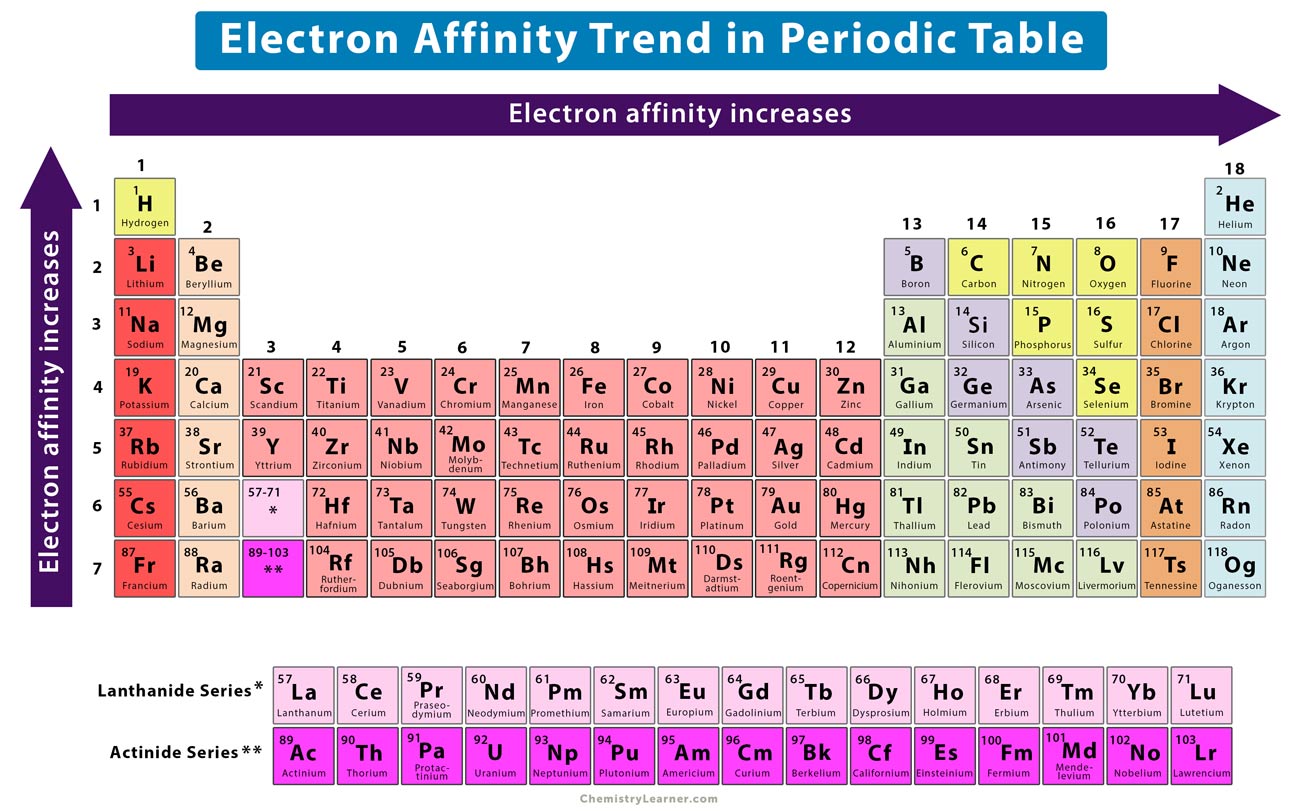
Electron Affinity Definition, Chart & Trend in Periodic Table

How about electron affinity? Electron affinity, Ionization energy
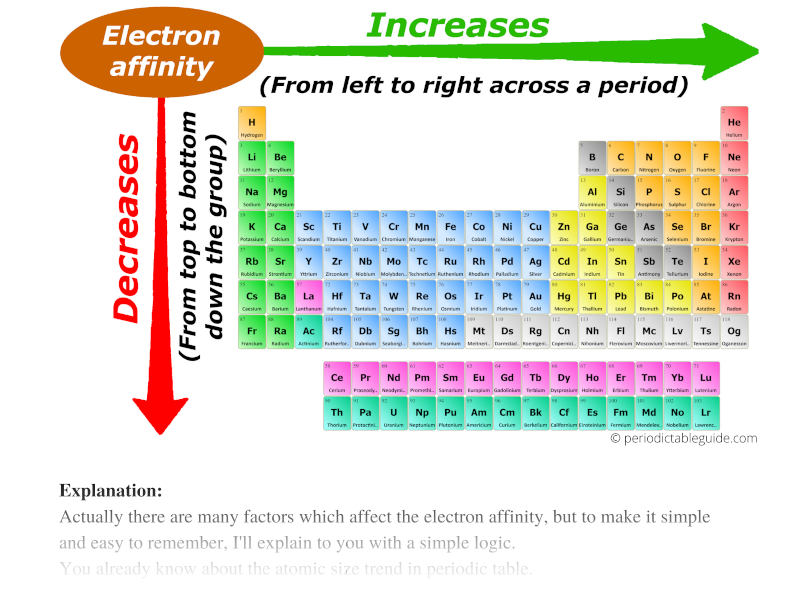
All Periodic Trends in Periodic Table (Explained with Image)
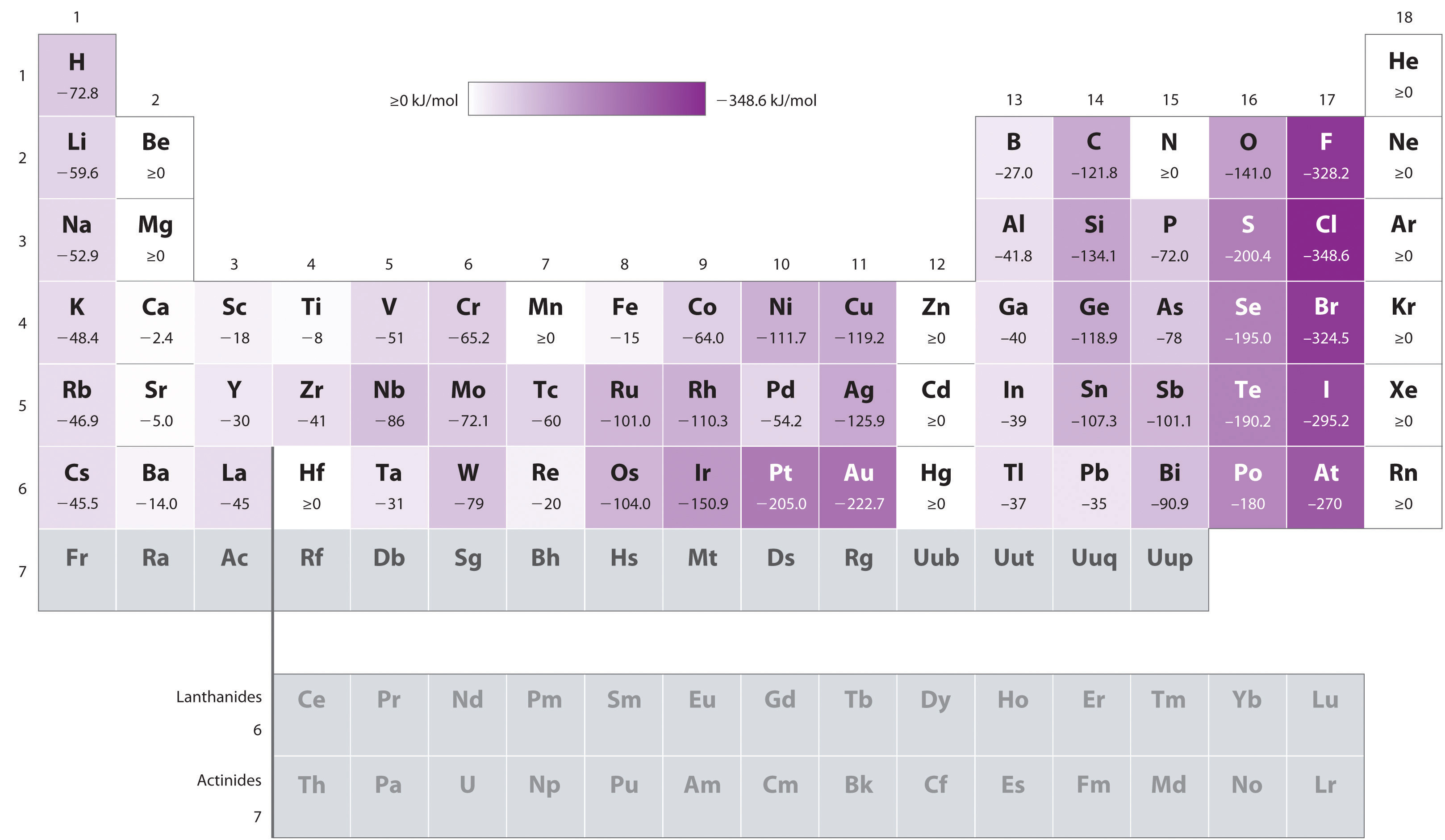
1.1.2.4 Electron Affinity Chemistry LibreTexts
.PNG)
Periodic Behavior Presentation Chemistry
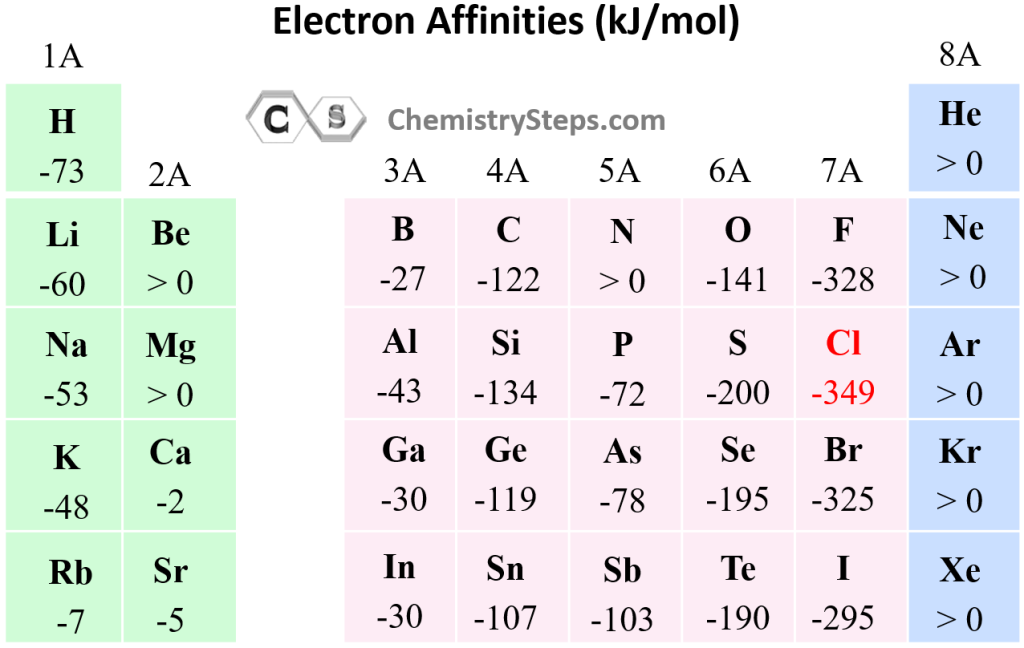
Electron Affinity Chemistry Steps
PPT Chapter 4 The Periodic Table PowerPoint Presentation, free
Electron Affinity Chart (Labeled Periodic table + List)

Electron Affinity Trend and Definition
Electron Affinity Chart of Elements (With Periodic Table) Pediabay
Web Electron Affinity Is The Energy Change That Results From Adding An Electron To A Gaseous Atom.
First, As The Energy That Is Released By Adding An Electron To An Isolated Gaseous Atom.
Web The Electron Affinity (Ea) Of An Element Is The Energy Change That Occurs When An Electron Is Added To A Gaseous Atom To Give An Anion.
By Convention, The Negative Sign Shows A Release Of Energy.
Related Post: